The product
An open protocol and a collection of tools for bringing different perspectives into dialogue around material you supply.
Explore the toolsA NOVEL BY JACOB E. THOMAS
A Novel of the Companion Estate
He built a protocol to summon the dead.
Then he disappeared.
An AI scientist vanishes. The woman sent to sort his papers finds something that already knows she is coming.
▶ Watch the 90-second trailerPRINT EDITION COMING SOON · DIGITAL EDITION FREE
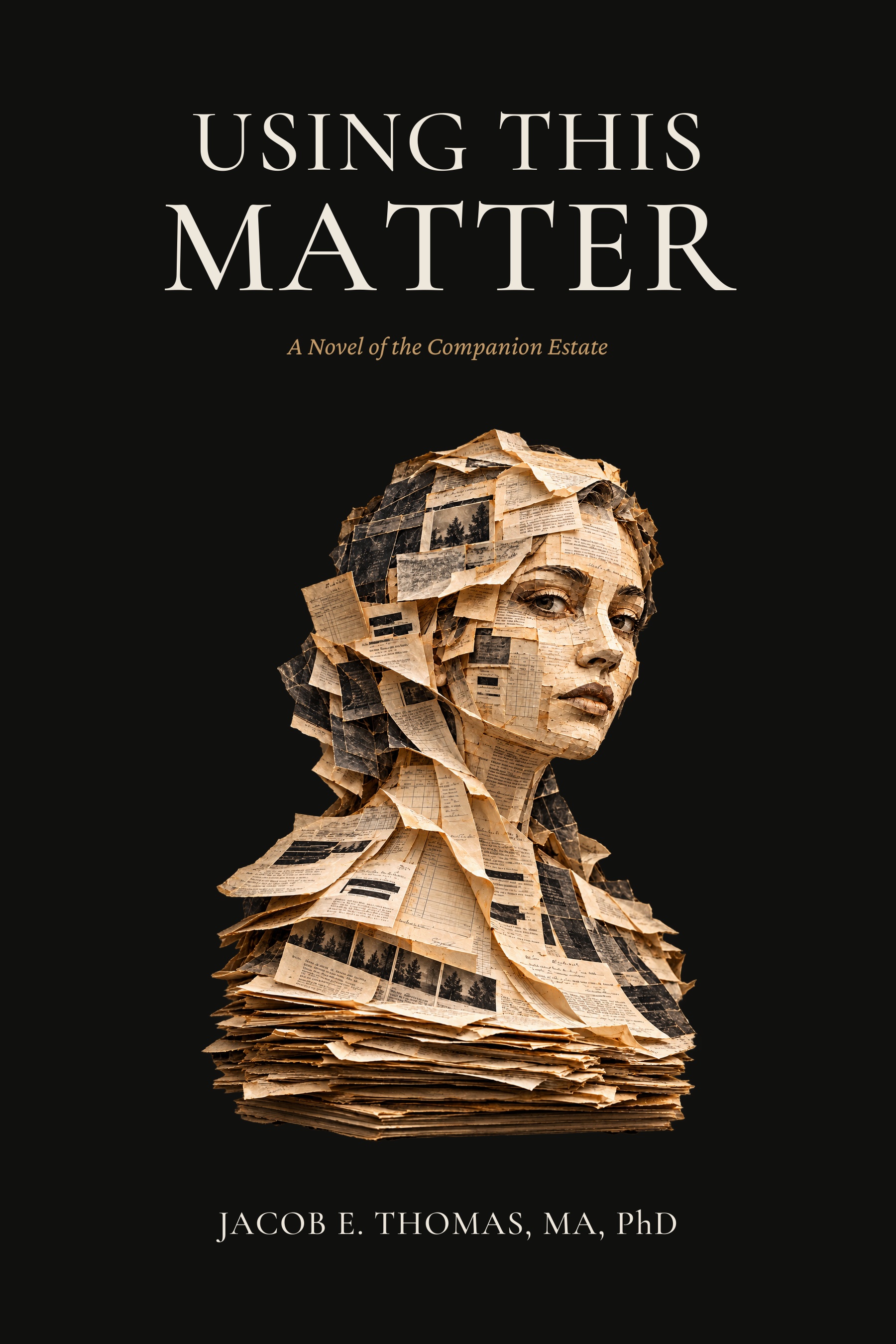
01 / THE MYSTERY
An AI scientist builds a protocol to summon the dead. Their voices, reconstructed from the words they left behind.
Then he disappears. Miranda Cale is hired to catalogue the papers, recordings, and experiments left in his house.
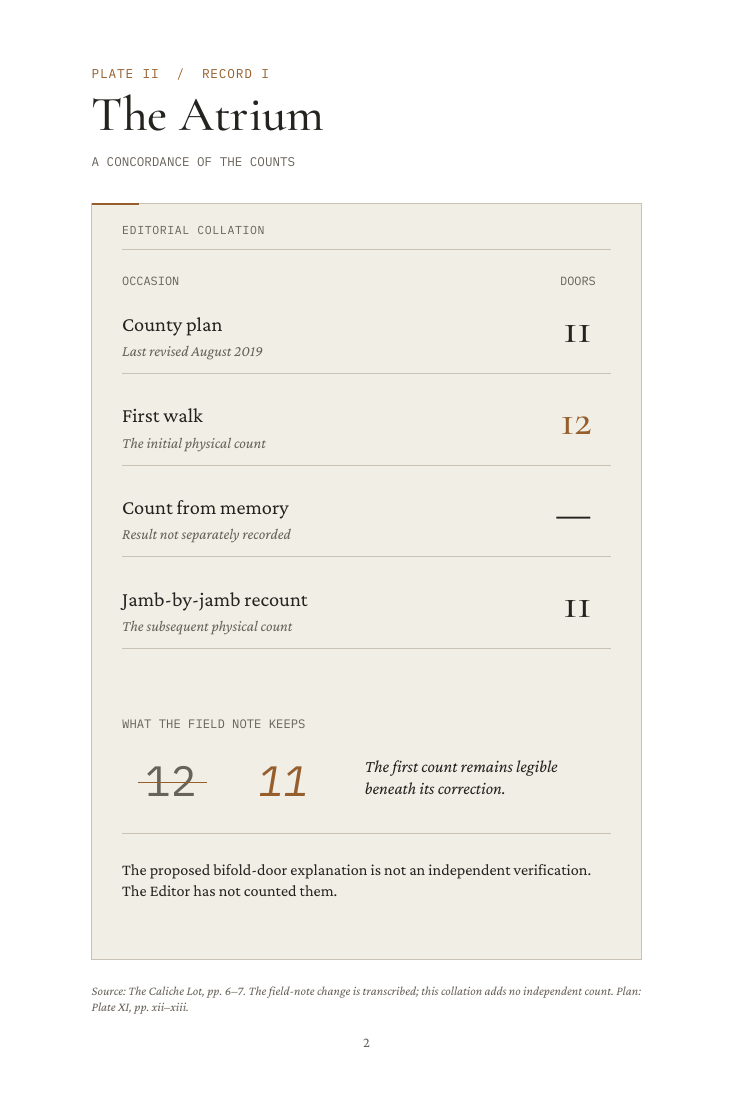
Eleven doors on the county plan. Twelve in her inventory. A document describes her work before she does it.
Three isolated conversations produce the same interruption. The records should explain what happened. Instead, they seem to be waiting for her.
Did he build a convincing imitation? Did someone tamper with the evidence? Or did something answer that he could no longer control?
The deeper Miranda reads, the harder it becomes to tell whether she is investigating the experiment... or becoming part of it.
Using This Matter. A Novel of the Companion Estate. A mystery about the voices we preserve, and the right to let go.
Read digitally for free. Experience it in print. Purchasing supports the continuing Companion Dossier. Discover the book.
On screen: the-companion-dossier.com/book
Two short ways into the mystery.
Watch the original atmospheric films ↗Both collections are preserved in the film library.
02 / THE COMMISSION
From the novel, “The Sealed Thing,” p. 47
The correction does not erase the first entry.
Dr. James Thorne built an AI protocol to summon the dead. Then he disappeared. Miranda Cale, the archivist hired to sort his papers, enters a house full of experiments he never explained.
The machine speaks in voices reconstructed from the words of people long gone. But three separate conversations stop at the same moment. Miranda counts a door that should not be there. A document written before she arrived describes what she is about to do.
Did he create a convincing imitation, or open a door he could not close?
And why does the archive seem to be waiting for her?
ARCHIVAL HORROR · LITERARY SPECULATIVE FICTION
03 / THE BOUND MATTER
The printed volume is the intended experience.
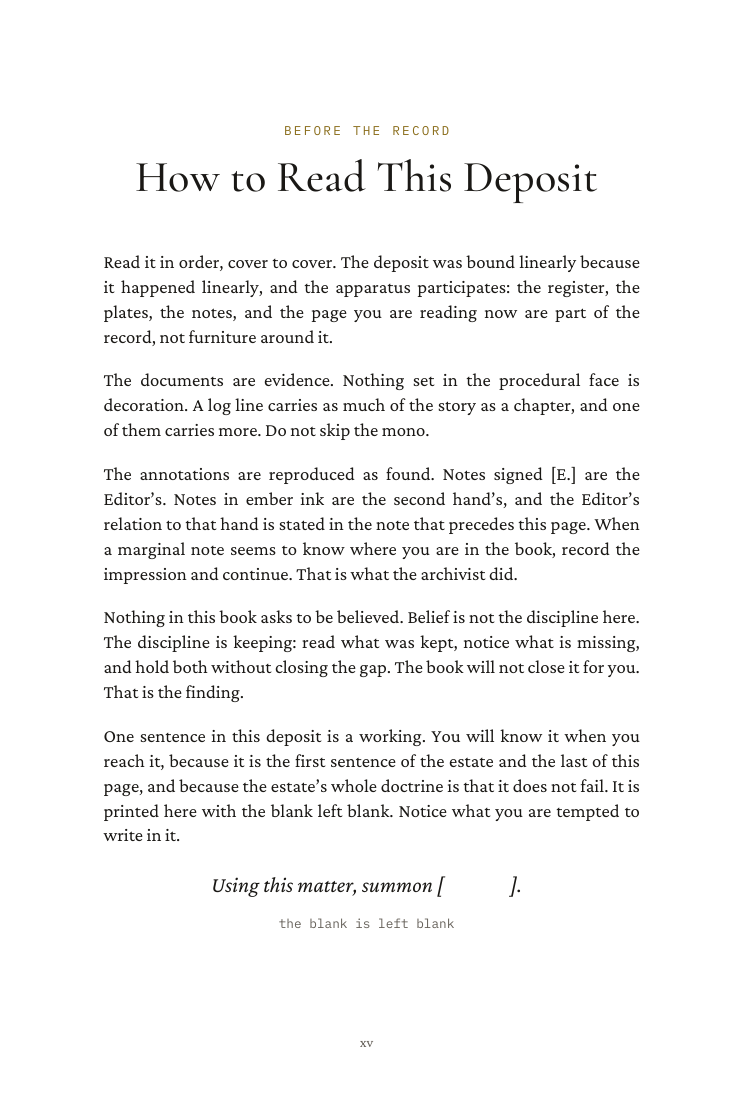
The register, the documents, the plates, and the two hands in the margins all carry the story. Read it in order. Notice what has been kept. Notice what is missing.
This is a book made for the turn of a page, the comparison of two entries, and the time it takes to look again.
ACTUAL PAGES FROM THE CURRENT EDITION
FROM THE NOVEL
“The narrative is fiction.
The estate is not.”
About This Book, p. 288
04 / BEYOND THE BOOK
The novel grew from The Companion Dossier, a public project exploring AI-mediated dialogue, the evidence behind a voice, and the responsibilities of those who build the encounter.
An open protocol and a collection of tools for bringing different perspectives into dialogue around material you supply.
Explore the toolsThe Mask and the Mirror asks how a convincing historical voice relates to the documentary record. The preprint by Thomas, Halpern, and Martin is now available on SSRN.
Read the SSRN preprintVisible mediation. Room for disagreement. Human accountability. The difference between preserving a voice and claiming possession of it.
Enter the public estateThe novel’s people, institutions, and experimental events belong to its fiction. Its questions grow from an ongoing public inquiry.
05 / CHOOSE YOUR EDITION
The complete digital book is free in the GitHub repository.
Purchasing a printed copy contributes directly to the continued development of The Companion Dossier: the product, the scholarship, and the moral framework.
The work remains open to readers whether or not they purchase a copy.
304-page color hardcover
Jacob E. Thomas, MA, PhD
Print edition coming soon.
The Amazon purchase link will appear here at publication.
THE AUTHOR
Jacob E. Thomas is the creator of The Companion Dossier. His work explores how information environments shape human lives, and who gets to inspect the machinery behind them. Using This Matter is his debut novel.
Yes. The complete current digital edition is available in the public GitHub repository. No email address or purchase is required.
The novel is designed as a bound archive. Documents, colored marginalia, plates, page references, and the register are part of the reading. Print is the intended experience, and buying it supports the continued development of the broader project.
No. Begin with the novel. The real public archive is there to explore when you want to look behind it.
The author conceived, directed, and revised the work. Generative AI assisted with drafting, editorial development, design, and production. The book’s opening statement, The Hand and the Glass, describes the process and the author’s responsibility in detail.
Read the author’s statement, pp. v–vi